What Is Considered High Hours on a Mini Excavator?
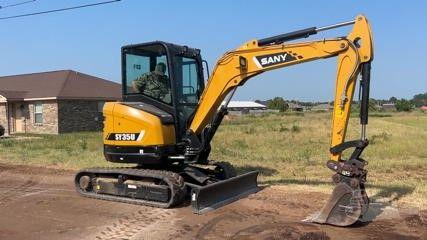
For a mini excavator, high hours generally start somewhere around 5,000 to 6,000 hours, and many buyers treat 6,000 to 8,000 hours as clearly high. That is the short answer to what is considered high hours on a mini excavator. These are general industry ranges, not hard rules. A clean 6,000-hour machine with records can be a better buy than a neglected lower-hour machine.
If you are shopping used in East Texas, the meter is only your starting point. Our broader guide to how many hours is too many for a used excavator also covers larger excavators. This article focuses on compact excavators: the hour ranges that apply to them, how service history changes the picture, and what to inspect before you make an offer.
What Is Considered High Hours on a Mini Excavator?
Industry sources on compact machines tend to agree on a rough pattern. The first several thousand hours are usually trouble free with routine service. Past about 5,000 hours, hours start to count as high and the machine deserves a closer look. Past 8,000 hours, major component work becomes more likely. 2M Machinery's own general excavator guide frames 6,000 to 8,000 hours as the point most buyers call high for a mini.
Is 2,000 Hours a Lot for a Mini Excavator?
No. For a compact excavator, 2,000 hours is low to moderate. At that reading, the meter alone is not usually a high-hour warning sign. Many buyers see 1,000 to 3,000 hours as the value window: cheaper than new, with working life ahead.
There is one catch. Hours only measure run time, not how hard those hours were. A 2,000-hour machine that ran a hydraulic breaker all day in abrasive ground with skipped services can be in worse shape than a 5,000-hour machine used for light trenching. Neglected minis have failed well before 2,000 hours. Check service records, track wear, hydraulic performance and the kind of work the machine has done.
Mini Excavator Hour Ranges at a Glance
Treat this table as general guidance, not a valuation. Brand, model, attachments and local demand all move the price.
How Many Hours Does a Mini Excavator Last?
Industry sources commonly put a well-maintained mini excavator in the range of 7,000 to 10,000 hours before owners face major component decisions. Carefully maintained machines are reported to run past 12,000 hours. On the other end, a machine that skipped oil changes, ran with loose tracks and worked in abrasive ground can be finished far sooner.
Lifespan also depends on duty cycle, meaning the type of work the machine does hour after hour. Digging irrigation lines in sandy loam is an easier life than breaking concrete or clearing stumps. Compare work histories, not just meters. If you are still deciding between machine types, our skid steer vs mini excavator comparison walks through which one fits common jobs.
What Matters More Than the Hour Meter?
Three things carry more weight than the meter reading:
Service history. Dated records for oil, filters, hydraulic fluid and final drives show the machine was cared for. A higher-hour machine with records is often the safer buy.
Undercarriage condition. Tracks, rollers, idlers and sprockets are expensive wear items on a compact machine.
Hydraulic health. Slow or jerky boom, arm and swing movement, weak lifting, or oil film around cylinders and hoses all point to work ahead.
Add the application to that list. A machine that ran a hydraulic hammer or a mulching head puts more stress on pumps and pins than one that dug footings. Ask what attachments it ran and how often.
What Should You Inspect Before Buying?
Work through the machine in a set order so nothing gets missed. First, read the hour meter and photograph it. On an older machine, compare the hour reading with maintenance records and visible condition, then ask the seller about any differences.
Walk the undercarriage cold. Check track tension, grouser height, loose or seized rollers, and leaks at the final drives.
Check pins and bushings. Rock the bucket and boom. Visible play means repair work is coming.
Look for leaks. Inspect cylinder rods for scoring, and hoses and fittings for weeping or fresh paint hiding a seep.
Start it cold. Watch for hard starting, smoke that will not clear, and warning lights that stay on.
Run every function. Cycle boom, arm, bucket, swing, blade and both travel directions. Movement should be smooth at full extension.
Test the auxiliary circuit. If you plan to run a breaker, auger or thumb, confirm the hydraulics work under load.
Inspect the cab and frame. Check for cracked welds, bent blade edges, damaged glass and a working seat belt.
Then price the gaps. If the undercarriage is near the end of its life or the auxiliary circuit is weak, get machine-specific repair estimates and factor them into the price you are willing to pay.
Buying a Used Mini Excavator in East Texas
For an East Texas machine, ask what ground it worked in and whether the undercarriage was cleaned out regularly. Soil, brush and stump work, and attachment use all affect wear. Buyers around Tyler, Lindale, Bullard, Whitehouse, Jacksonville, Flint, Mineola, Chandler, and Longview by quote should raise those questions with any seller.
If you are not sure a purchase is the right call yet, running a comparable machine first is a practical test. You can review current excavator rental options to try a size on your own ground, then look at used machines in our inventory once you know what fits. Listings include a condition rating. Contact 2M Machinery to discuss a specific machine and ask what condition and service information is available.
Frequently Asked Questions
Is 3,000 hours a lot for a mini excavator?
Not necessarily. At 3,000 hours, a compact excavator sits below the general high-hour range, but condition still decides the value. Focus on undercarriage wear, hydraulic performance and dated service records rather than the meter alone.
What is considered a lot of hours on a mini excavator compared with a full-size one?
Minis are often called high-hour around 5,000 to 6,000 hours, while larger excavators are generally built to accumulate more hours before major work. Treat both ranges as a starting point, then compare maintenance records, application history and visible wear.
Can a high-hour mini excavator still be a good buy?
Yes, if the price reflects its condition. A well-documented machine with a healthy undercarriage and recent component work can serve a light-duty owner well. Budget for upcoming repairs, and have a mechanic inspect it before you agree on a price.
How many hours does a mini excavator run per year?
It depends on the operation and how often the machine is used. Divide the meter reading by the machine's age to see whether it appears to have worked lightly or steadily, then compare that result with service records and visible wear.
Should I rent before buying a used mini excavator?
Renting makes sense when your workload is uncertain or you are unsure which size fits. A short rental shows how a machine handles your soil and job sites, which makes the hour counts and specs on used listings easier to judge.
Putting High Hours in Perspective
Knowing what is considered high hours on a mini excavator keeps you from overpaying for a low meter or walking away from a sound machine. Use the ranges as a guide, inspect carefully, and price the repairs you can see.
2M Machinery is a family-owned yard serving contractors, landowners and farm operators across East Texas, with used machines inspected before they leave the lot. Call (903) 330-6029 to talk through a specific machine, or browse current equipment at 2mmachinery.com.